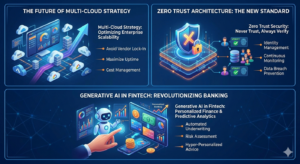
In the modern digital landscape, the question is no longer whether to move to the cloud, but how many clouds your business needs. A Multi-Cloud Strategy—the use of two or more cloud computing services from different providers—has become the gold standard for global enterprises seeking to avoid vendor lock-in and maximize uptime.
Why Multi-Cloud is Essential
By distributing workloads across platforms like AWS, Google Cloud, and Microsoft Azure, companies can leverage the unique strengths of each provider. For instance, a firm might use Google Cloud for its advanced machine learning capabilities while relying on Azure for its seamless integration with legacy Windows-based enterprise tools.
Key Benefits:
-
Risk Mitigation: If one provider experiences an outage, traffic can be rerouted to another.
-
Compliance: Data residency laws often require data to stay within specific borders; multi-cloud allows for local data hosting.
-
Cost Management: Competitive pricing between providers allows businesses to negotiate better rates for high-volume storage.
As we move further into 2026, the integration of AI-driven automation in cloud management will be the deciding factor in maintaining a competitive edge.